When Bruce Rudy, PhD, began planning his fall 2025 Management Strategy course at the Alvarez College of Business, he wanted students to walk away with more than a grade and a final project. His vision was simple but powerful: help students see and show the skills they were developing— skills employers care about, and that students can confidently claim.
“Experience is the name of the game in recruiting and career development,” Rudy, associate professor in the Department of Management, says. “And our students come to us with a lot of real-world experience, whether through work, school or volunteering. The goal is to help them translate that experience into skills we know to be important for career success like communication, teamwork and problem solving.
Through a partnership between Territorium and the UT San Antonio Office of Teaching, Learning, and Digital Transformation in Academic Innovation, that vision became a reality.
Making Soft Skills Matter
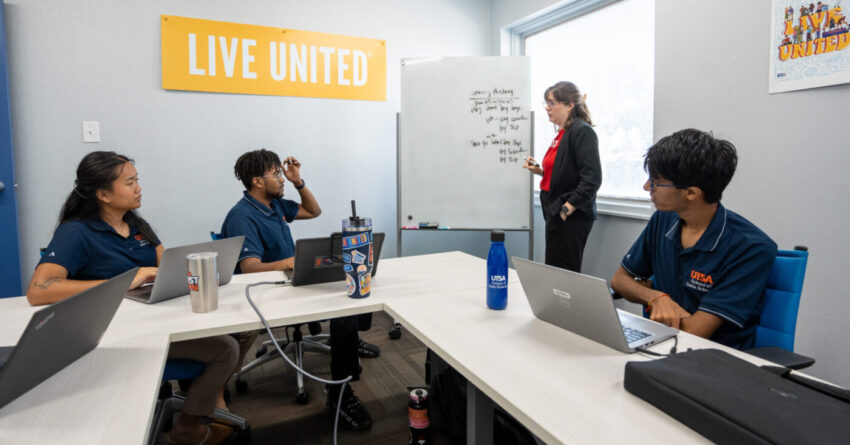
In this capstone course, Management Strategy students were introduced to LifeJourney, a digital platform where they could earn skill-based badges tied directly to course activities. Rather than treating “soft skills” as an invisible side benefit, Rudy made them explicit, visible, and assessable. Students in his course worked toward four key power skills: communication, teamwork, problem solving and storytelling.
Each badge could be earned at three levels — developing, proficient, or advanced — based on performance in authentic assignments and validated assessments. As students progressed through the course, they could watch their badges accumulate in real-time, creating a living record of their growth.
When students completed all four badges, they earned a culminating micro-credential called a “Power Skill”, a clear, portable signal of their readiness to collaborate, lead, and solve complex problems in the workplace.
What made this pilot project distinctive was not only the focus on skills, but also how students could use them beyond the classroom. Students can utilize these badges during interviews and networking conversations as evidence of the skills they bring to the table. Instead of saying “I’m a good communicator,” students can show a credential that documents how they demonstrated communication in a rigorous, strategy-focused course.
“Supporting Dr. Rudy and this pilot has been a wonderful opportunity to see how intentionally designed digital credentials can transform the student learning experience,” says Claudia Arcolin, PhD, executive director for Teaching and Learning Experiences.
“When we help students make clear connections between what they learn and their future career outcomes, we empower them to enter the workforce with confidence and evidence-based stories of their growth.”
Strategy Meets Real-World Storytelling
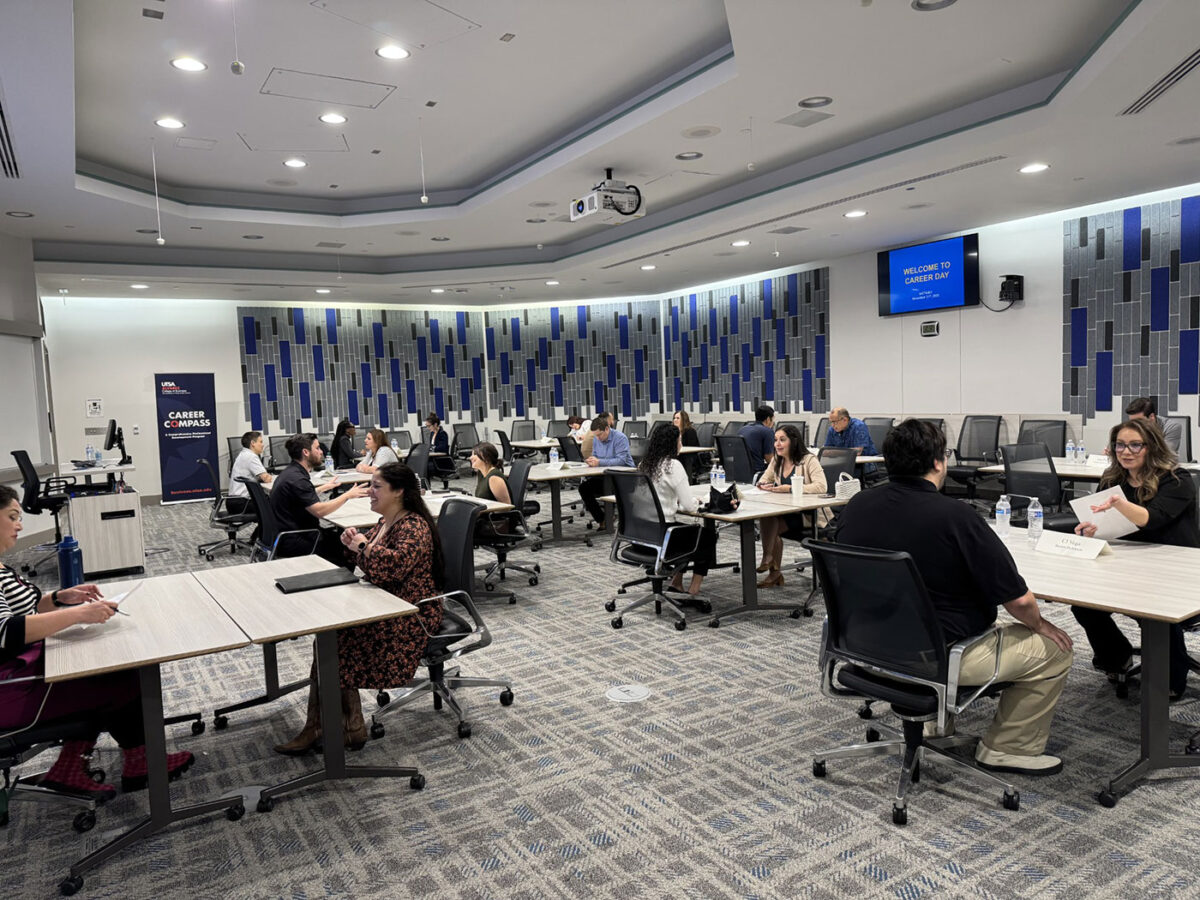
At the end of this pilot program, Rudy’s students had the opportunity to put their newly earned skills to the test during an event formatted as “mentor-student speed dating,” which brought together current students and alumni from UT San Antonio’s Executive MBA program. The students shared their newly earned digital badges, told the story behind each badge, and engaged in meaningful conversations with alumni about career paths, skills development and how to translate classroom experiences into professional success.
For many, it was the first time they could clearly connect their coursework, their skills, and their future career goals in one coherent narrative.
“Professor Rudy invested a lot of time and effort in creating this opportunity, by collaborating with representatives from different businesses in the community and inviting them to meet with us,” says Tania Riedel, a management strategy student. “It was a low-pressure environment that made it an excellent practice setting, and I was able to make new connections and present the best version of myself, and strengthen my interviewing and communication skills. It was a valuable experience, and I’m grateful for the chance to meet people I plan on staying in contact with.”
Several of the alumni mentioned how the students demonstrated skills and traits that aren’t teachable by employers.
“It was a pleasure returning as an alum to support the mock interviews,” says Michelle Scarbrough ’25, executive manager at GVEC. “The students I spoke with were well-prepared, engaged and eager to learn. Their readiness to join the workforce was clear, and this experience is a meaningful way to help bridge the gap between the classroom and industry expectations.”
This session didn’t just celebrate the end of the course; it modeled the kind of reflective, skills-based learning students can take into job interviews, internships, and early career roles.
A Scalable Model for Classroom-to-Career Innovation
The Management Strategy course became a signature experience that blended strategic thinking with career readiness while illustrating how a traditional capstone can evolve into a high-impact, skills-forward experience that supports UT San Antonio’s classroom-to-career mission.
The success of this pilot course was just the beginning. A parallel pilot also launched in the Master of Arts in Learning, Design and Technology program, where graduate students in the Development of Learning Technologies course used LifeJourney to earn micro-credentials aligned with their professional competencies.
Together, these pilots demonstrate how UT San Antonio is leveraging digital credentials across disciplines, helping both undergraduate and graduate students build a clear, evidence-based story of who they are as learners, professionals, and future leaders.