

The Institute of Texan Cultures (ITC) has moved into a new space. But every inch of it is meant to reflect the work, creativity and shared determination of a UT San Antonio team that rebuilt a museum from the inside out.
“Over 18 months, our staff took on new roles, learned new skills and redefined how they work together,” says Monica Perales, associate vice provost at the ITC. “What visitors will see on opening day is not just an exhibit floor, but the mark of a team that united around a single purpose: to create an exciting and intimate experience of Texas stories.”
When the Institute of Texan Cultures opens on today, visitors will enter a museum shaped by expertise and by collective energy — a museum formed through collaboration, adaptability and genuine care.
A welcome that sets the tone
The new museum opens with a lobby designed as a gathering place that is spacious, bright and anchored by a sweeping mural that introduces guests to Texas’ many cultural threads.
For Museum Services Manager Kandice Howard-Fambro, the lobby became a symbol of the team’s new way of working.
“This is the first moment visitors step into our world,” she says. “We want it to feel open, inviting, accessible — a place where everyone feels they belong.”
What visitors to the new ITC will see has been shaped by a team of people who spent months preparing to welcome guests into the space.
Under Howard-Fambro’s guidance, customer service associates and docents are learning new ticketing tools, walking the galleries to understand the flow of movement and practicing how they will greet school groups and families on opening day.
As part of this effort, the team is partnering with KultureCity, a non-profit organization that provides sensory accessibility training and sensory bags for guests who need them. The program helps create an environment that helps to ensure people with sensory needs can fully participate in the exhibits.
During the renovation, Howard-Fambro often split her days between planning for customer-service facing operations at the museum and behind-the-scenes coordination for staff offices at the Downtown Campus.
“I’ve had to become more strategic and flexible,” she says. “But when I imagine opening the doors and saying, ‘Welcome to our new space,’ every bit of it feels worth it. People will be surprised at what this small but mighty team has built.”
Galleries for connection
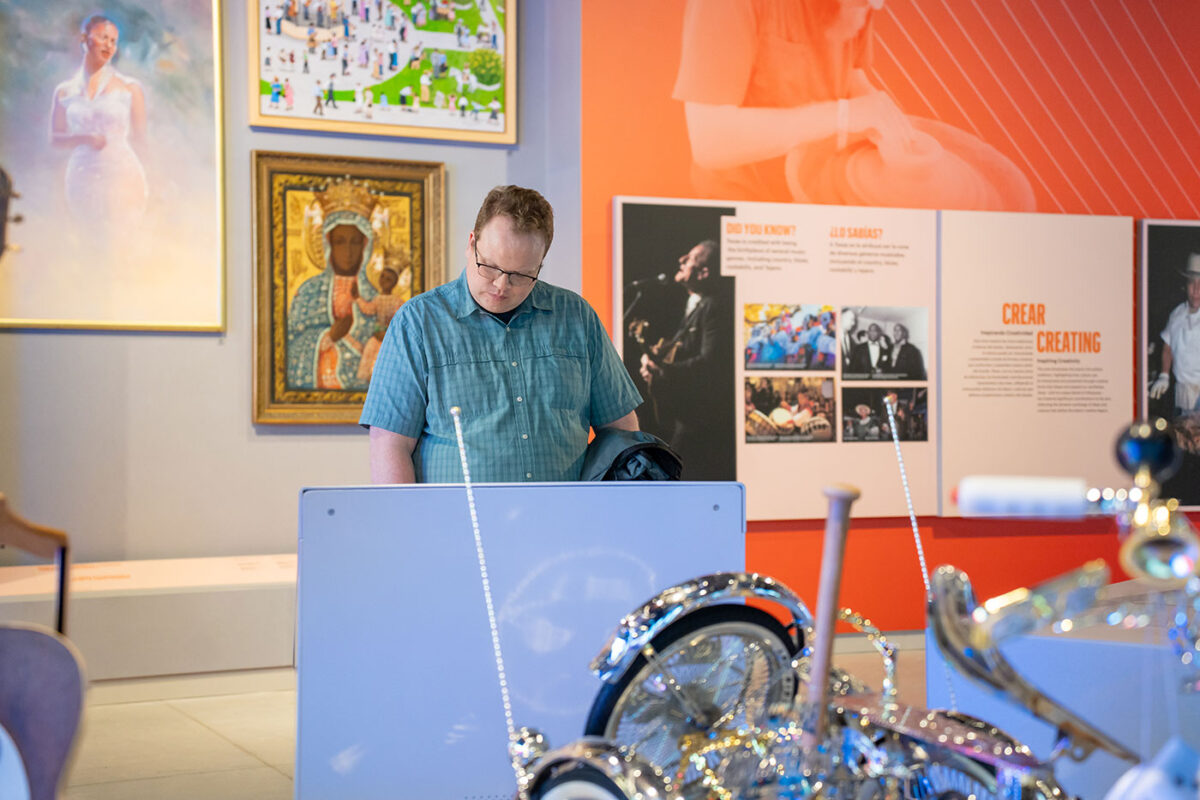
Inside the main gallery, four thematic zones are centered around shared human experiences — family, traditions, creative experiences and celebrations.
Head Curator Bianca Alvarez describes the space as “personal, reflective and immersive.”
The new footprint of the museum challenged the team to design every square inch with intention. Every object, image, video and sound was thoughtfully selected.
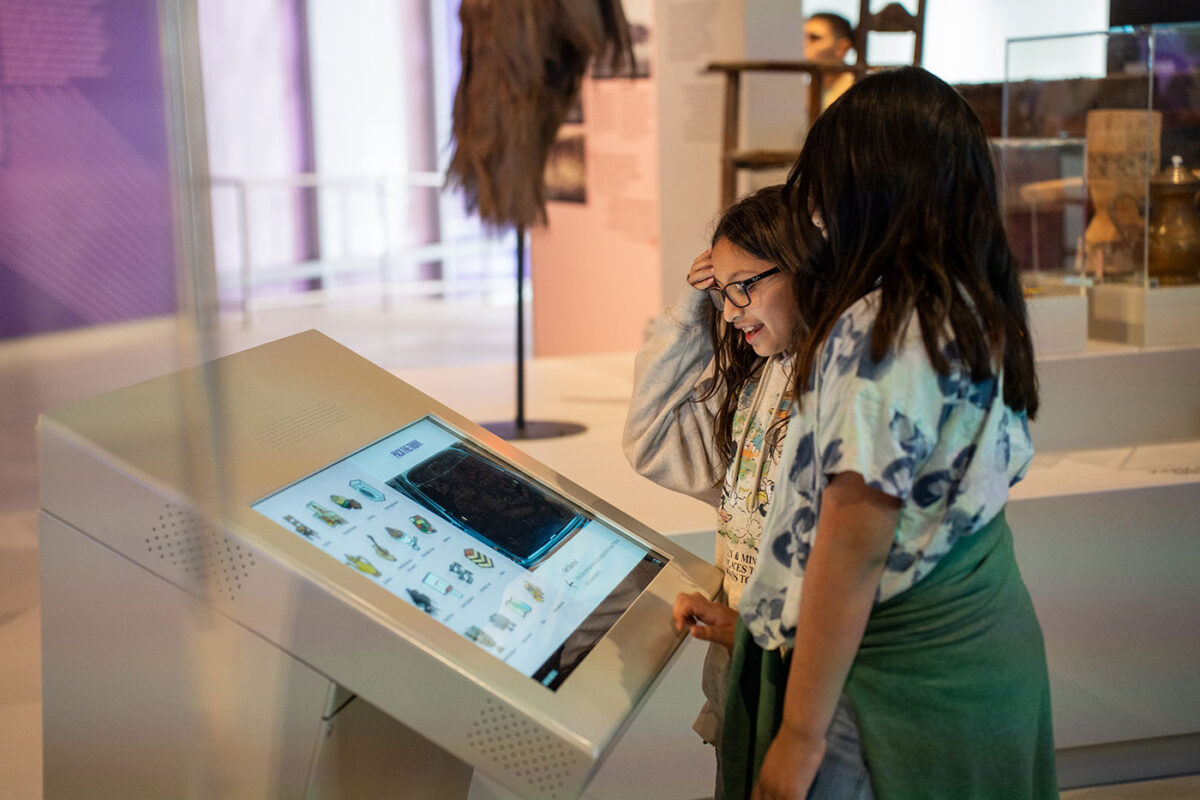
Months of collaboration, research and experimentation resulted in an exhibit built for display and also for dialogue. Multimedia stations, projections and personal accounts encourage visitors to linger and reflect.
“By leveraging technology and working with our multimedia team, visuals and audio greet visitors the moment they enter,” Alvarez says. “Panoramic views and digital stations weave images, sound and archival materials into scenes that help visitors feel the presence of the people behind each story, while anchoring us in Texas.”

First gallery experience
Exhibits Coordinator Cristina Winston spent months meticulously collaborating with Alvarez and Collections Manager Allison Valdivia to successfully relocate and install the collection in a new facility.
The team also focused on the details, including packing objects in conservation-grade materials, planning the logistics of transport and installing and deciding on the best way to display each piece.
The inaugural rotating exhibit, “Mumentous: The Upsizing of a Texas Tradition,” was the result of a coordinated effort across curatorial and design teams and a collaboration with the Arlington Museum of Art, which provided invaluable assistance in bringing the exhibit to the museum. ITC staff members also asked the public for donations of mums to put on display.
To celebrate the ITC’s homecoming, Winston led a small team of student workers and staff to craft an 18-foot-long homecoming mum. This massive project took six months to plan and build, featuring 1,333 yards of ribbon, along with millions of rhinestones and thousands of staples.
“Planning how the new museum space would come to fruition pushed all of us to think together and problem-solve in ways we hadn’t before,” Winston says. “The scale of the project meant no one person could carry it. The collaboration behind it mirrors the spirit of Texas diversity, and we hope visitors feel that spirit when they walk into the gallery.”
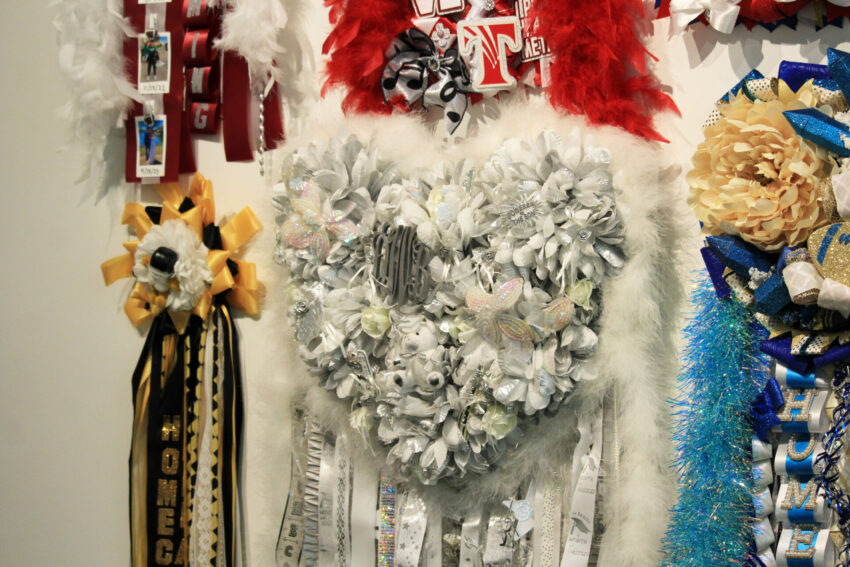


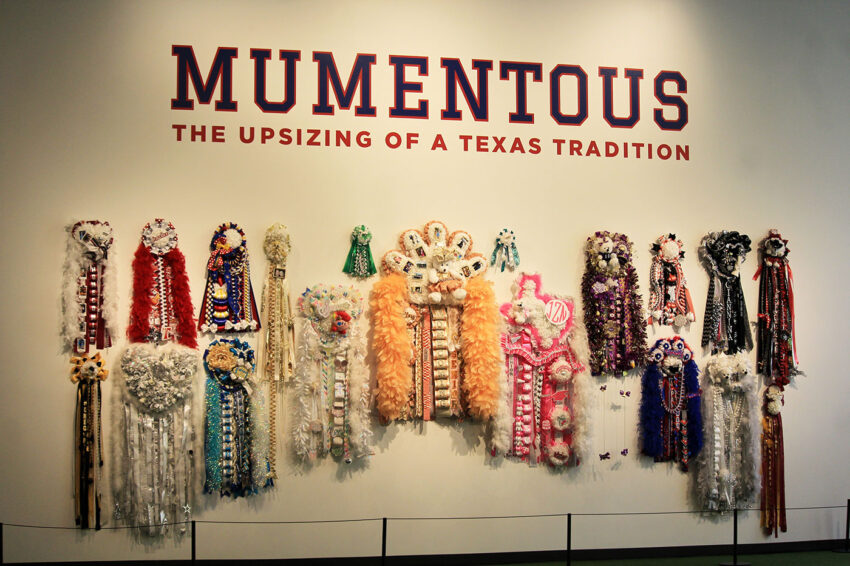
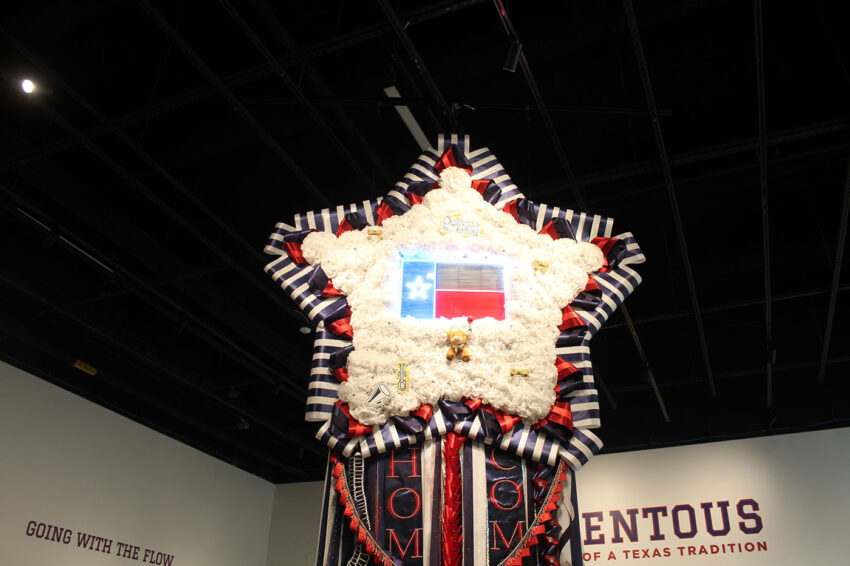
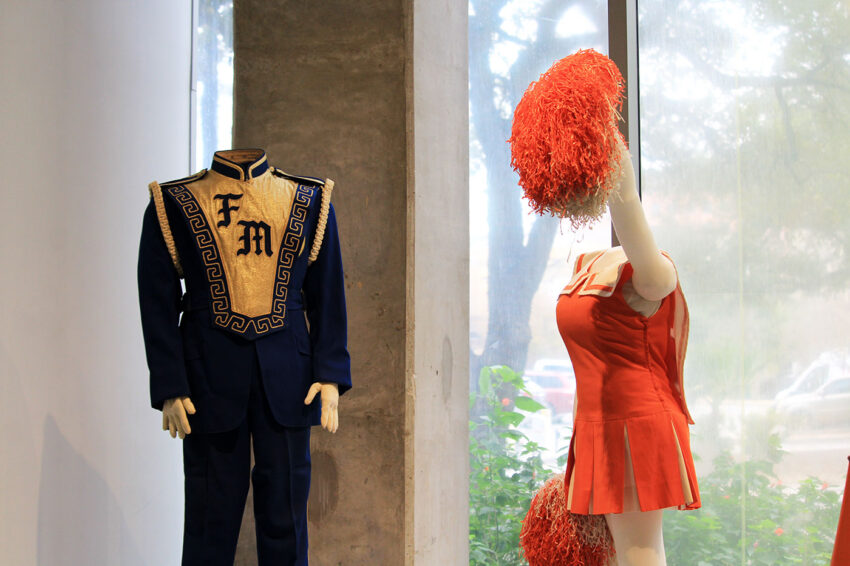
The “Mumentous: The Upsizing of a Texas Tradition” exhibit is the rotating exhibit at the Institute of Texan Cultures.
Caring for objects and stories
As collections manager, Valdivia worked behind the scenes, helping shape what visitors will see on opening day.
After a full relocation of the collection, and months of preparing objects for the new setting, she worked with the ITC’s curatorial and multimedia team and the exhibit designer to ensure accuracy, preservation and storytelling.
For the Tree of Life interactive exhibit, Valdivia and a curatorial intern examined historical accounts, film and cultural sources to shape the content that’s presented. That research formed the basis for the interactive highlights, story sequence and how the piece is introduced to visitors on the floor.
“I hope visitors notice the care behind every object,” Valdivia says. “From garments styled as they were meant to be worn to digital elements built from deep research, our goal was to present these pieces with accuracy and respect. Every detail reflects how much these stories mean to us.”
WATCH: Take a look inside the reimagined Institute of Texan Cultures.
Learning experiences
For the education team, the new space enabled a complete rethinking of how students engage with Texas culture.
Curator of Education Liz Blake Lopez, who has helped shape the exhibit conceptualization, writing and classroom connections, approached the redesign with a single goal: make every visit multisensory, personal and meaningful.
“A field trip should help students see glimmers of their own lives — past, present and future,” Lopez says. “We want them to leave feeling connected to the land, the people, even the plants and animals that make Texas what it is.”
Teachers and students will experience:
- Interactive, inquiry-based tours led by educators
- Highlight tours with docents stationed at key points
- Self-guided pathways with prompts in English and Spanish
- Exhibits that integrate 3D artifacts, photographs, archives, art and fashion
- Carefully paced experiences that encourage dialogue and careful looking
- Multimedia that deepens understanding without overwhelming the senses
Lopez also has been testing new rotation models for school groups, using the lobby mural and exhibits as anchors for activities that blend observation, creativity and reflection.
Her role has stretched across curation, design, programming, community outreach and frontline preparation.
“Some days I’m in the back designing content; others I’m up front training docents or setting up ticketing,” she says. “But that’s the beauty of this rebuild. Everyone has stepped outside their lane to build something better together.”
New ways to work
Across departments, the move required skills no one expected.
The visitor services staff learned exhibit handling. Curators assisted with educational planning. Educators helped craft visitor flow and procedures. And designers adapted every layout to create just the right fit for the new space.
Every crate that was moved, object cataloged, script revised, policy drafted and tour plan sketched — all became a shared effort.
- Admission will be free during the opening week, Jan. 29-Feb. 1.
- Regular admission pricing will begin on Feb. 4.
- Visit the Institute of Texan Cultures website for info on admission and operating hours.


No comment yet, add your voice below!