

Data powers everything. It shapes how we learn, how we work and how we innovate. At UTSA, students and faculty are harnessing that power to solve real-world challenges and drive meaningful change.
A leading national powerhouse in the fields of data science and artificial intelligence, UTSA’s momentum began in 2018 with a visionary investment from San Antonio business leader Graham Weston to help launch the School of Data Science (SDS), in the heart of downtown San Antonio. What started as a bold step toward preparing students for careers in data and analytics sparked a larger transformation across campus, one strengthened by Be Bold: A Campaign for Our Future.
“We’re standing at a moment of incredible opportunity—and the question is, how will we shape what’s next?” Weston says. “World-class educational institutions are key to that future, and there’s no institution more important to San Antonio’s success than UTSA.”
UTSA is now preparing to launch its new College of AI, Cyber and Computing. Together with SDS, the new college will fuel a growing ecosystem of research and innovation that places UTSA at the forefront of emerging technologies.
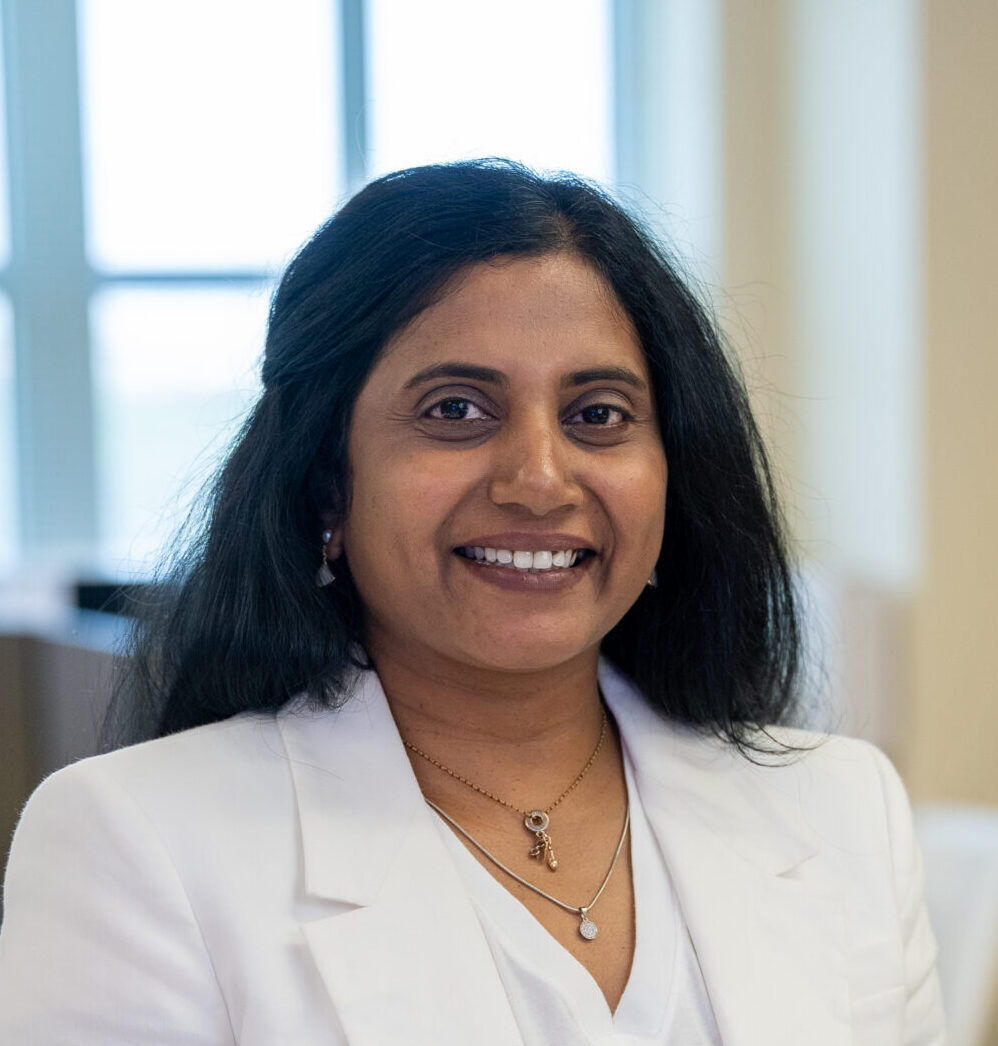
“UTSA is building an innovation ecosystem where research, talent development and industry partnerships come together to solve real-world problems—and the results are already here,” says Dhireesha Kudithipudi, founding director of MATRIX: The UTSA AI Consortium for Human Well-Being. “We’re developing AI technologies that are advancing solutions in healthcare, energy, cybersecurity, smart cities and beyond. What we are building today will shape the systems of tomorrow.”
Innovation Toward Growth
Purposeful contributions from partners like Dell Technologies and Frost Bank have helped advance this work. Dell expanded access to machine learning instruction, helping students build critical expertise in one of the fastest-growing areas in tech. Frost created the Frost Excellence Fund to support student fellowships and faculty-led research, offering new pathways for discovery and professional growth. These gifts are helping students turn their knowledge into action by contributing to projects that create value for both industry and community.
H-E-B is investing in the next generation of talent through UTSA’s Classroom to Career initiative. Its support helped launch the Data & AI Community Innovation Scholars program, which places data science students with local nonprofits to apply their skills in meaningful ways.
H-E-B also supports undergraduate development through the Prefreshman Engineering Program (PREP), which introduces younger students to STEM concepts like logic and data science, and through the creation of research-focused programming like the School of Data Science Undergraduate Research Fellowship.
For Mercedes Alejandro ’25, a recent computer science graduate, that kind of support made a lasting difference. After earning a degree in psychology, she returned to UTSA to follow her passion for technology. Through the Community Innovation Scholars program, she gained experience and clarity on her path forward.
“My true passion has always been technology, its constant evolution, the thrill of learning and its power to reshape lives,” she said. “This program reinforced my commitment to using that passion to empower others and inspire those with similar journeys. That’s what continues to drive me forward.”
Her experience led to an internship with H-E-B’s digital team. Alejandro will soon begin a full-time role as a software engineer.
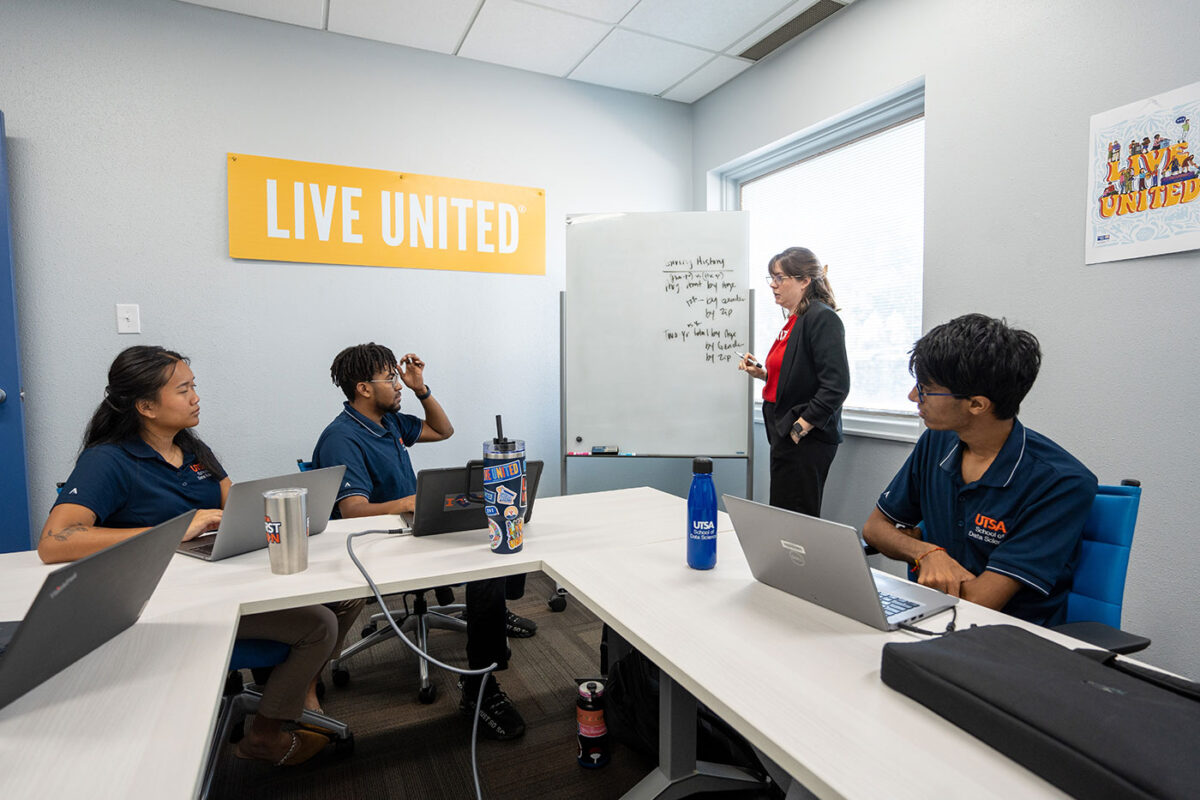
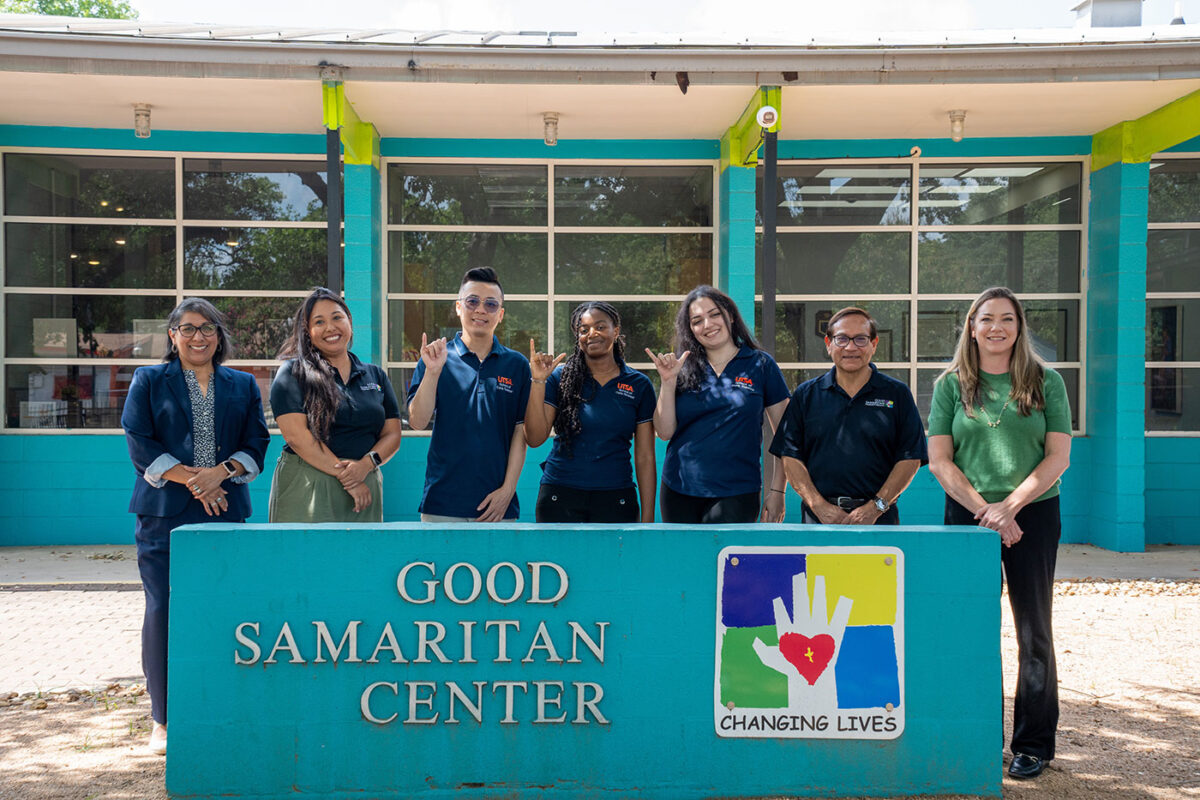
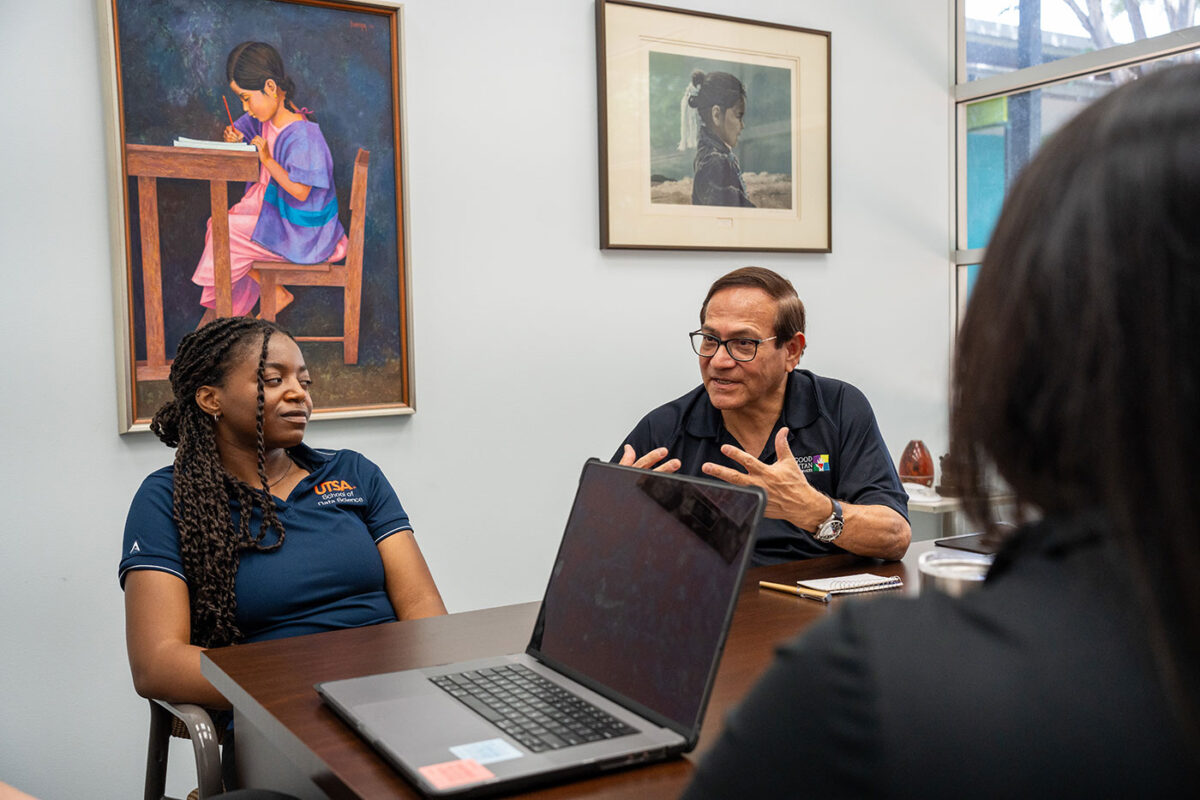
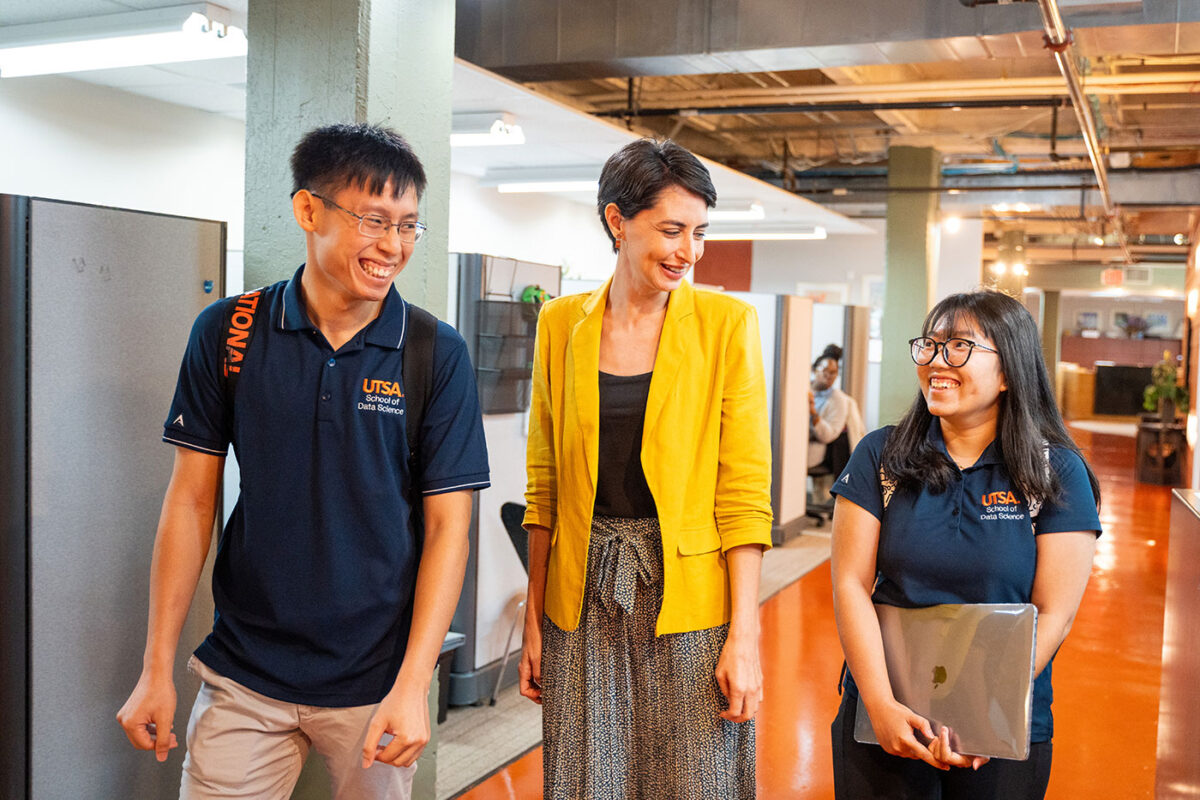
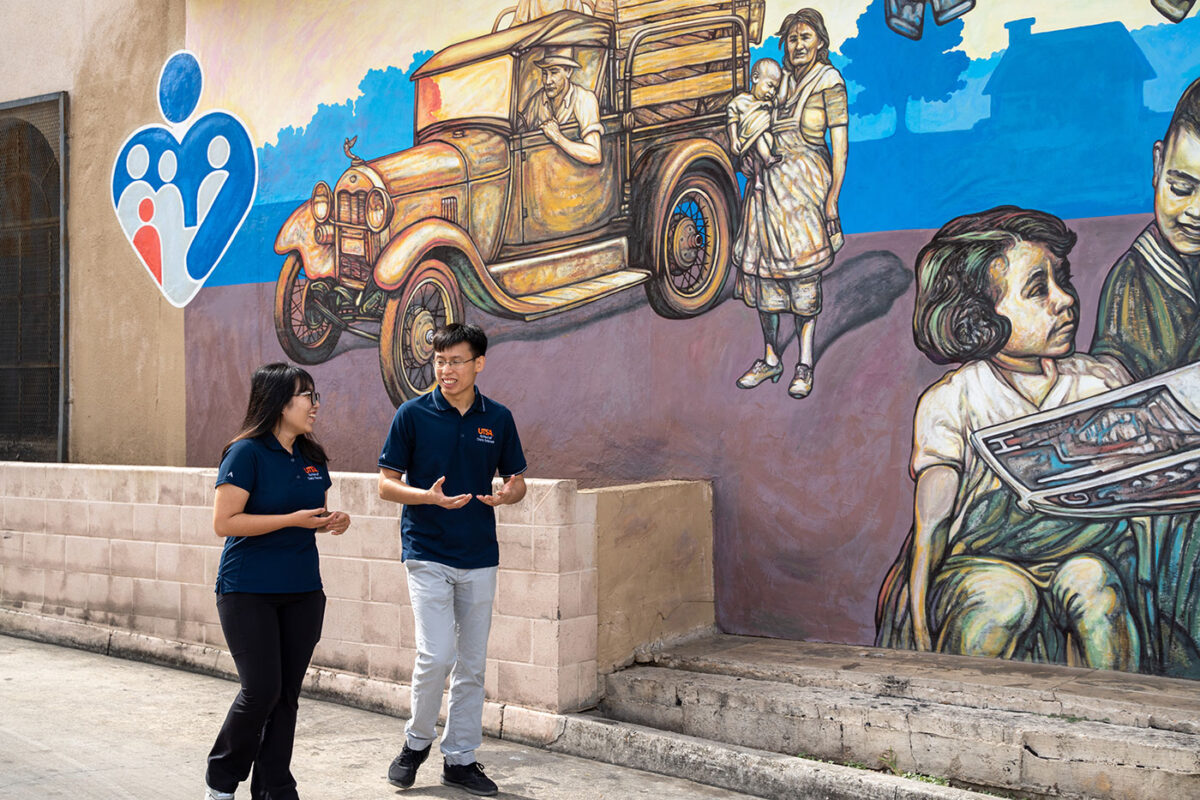
The Data & AI Community Innovation Scholars program partners students with nonprofits around San Antonio, such as Family Services, Good Samaritan and United Way.
Collaboration Across Disciplines
As UTSA’s capacity in data science expanded, so did its ambition to do more. The next logical step was to build artificial intelligence systems that could learn from that data and act on it. That idea is now driving Matrix AI, a university-wide research initiative led by Kudithipudi.
“We set out to build AI that reflects how people learn, think and solve problems,” says Kudithipudi. “The support we’ve received has made that vision possible. We’ve created a space where students are doing meaningful work from the very beginning, and where research is grounded in real needs.”
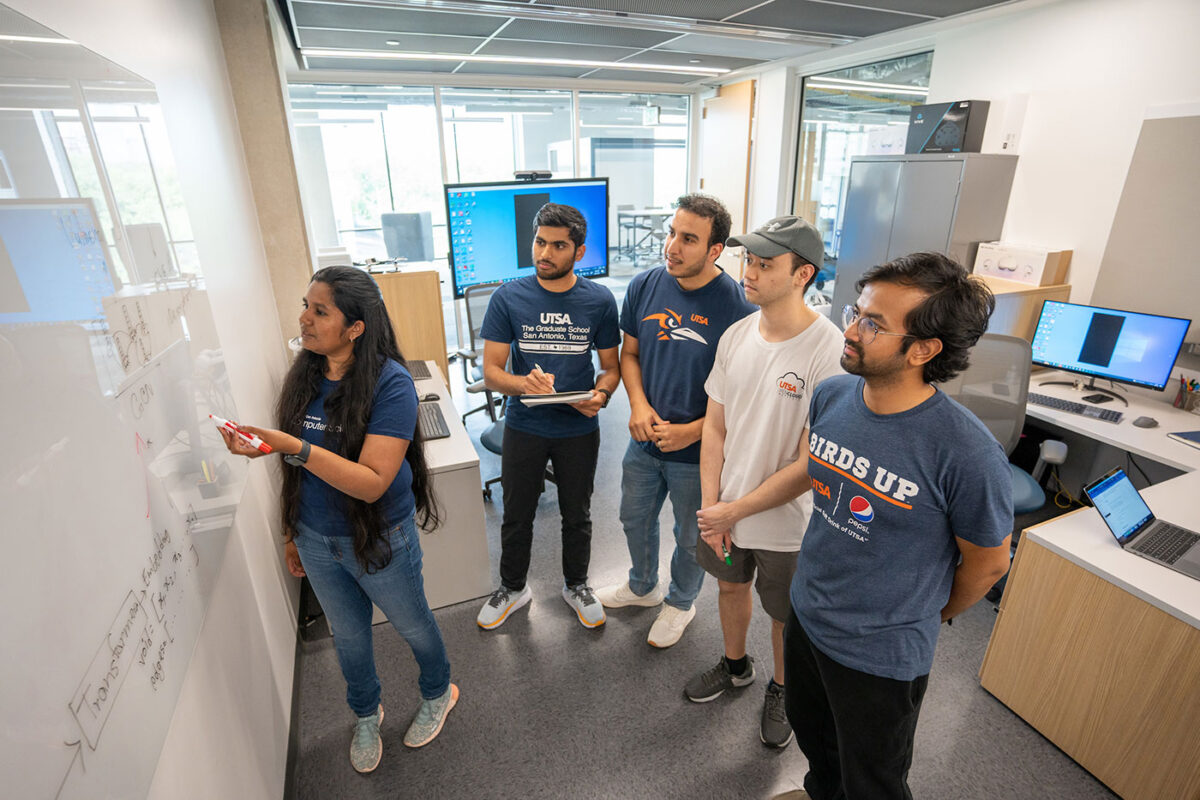
Matrix researchers are building intelligent systems that assist trauma physicians, detect early signs of neurological disease and improve disaster response. These breakthroughs are powered by expertise in neuroscience, biology, computer science and data modeling— fields that once existed in separate silos but now work in tandem via UTSA’s collaborative approach.
Expanding the Vision
With rapidly increasing enrollment in AI, computing and data science programs, the university will open the new College of AI, Cyber and Computing in Fall 2025. It will bring together four departments under one academic home, including computer science, information systems and cyber security, computer engineering and data analytics and statistics. The College will serve as a catalyst for research, education and workforce development in fields that are transforming every part of society.
Additional support from USAA will fund a student success center in the new college, designed to meet the needs of students in these rapidly evolving fields. It will also create a centralized data repository to support collaborative research and provide scholarships to help students persist through graduation.
“This is a very rare moment in AI where we are working closely with industry partners to solve real challenges and students are able to be on the front lines,” Kudithipudi says. “Partnerships like these do more than fund projects. They give our students the tools and confidence to lead. They help connect our research to the industries and communities it is meant to serve. And they allow us to build solutions that will outlast any one initiative.”
As UTSA continues to scale its leadership in data science and AI, these efforts represent more than academic progress. They reflect a growing movement powered by groundbreaking research, energized by student talent and faculty expertise, and are made possible through supporters that believe in what UTSA is building for the future.
WATCH: Matrix: UTSA AI Consortium for Human Well-Being makes breakthrough in research and opens doors for students.



No comment yet, add your voice below!